The paint on a car starts to dull long before the odometer shows a high mileage. Micro-wash scratches, gravel splashes, acid bird droppings, tree resin: each outing leaves on the bodywork aggressions that alter the varnish in successive layers. Preserving the new look of a vehicle relies on precise technical choices, not just a quick wipe with a sponge on Sunday.
Degradation of automotive varnish: what attacks the paint daily
The varnish that covers the base color measures a few dozen microns in thickness. It is this layer that provides the shine, and it is also the first to absorb damage. The sun’s UV rays break down the polymers in the varnish over time, causing gradual whitening and a loss of color depth.
Chemical contaminants worsen the process. Bird droppings, due to their acidity, attack the varnish within hours in hot weather. Tree sap, industrial fallout, and de-icing salt create localized corrosion spots if the varnish is already weakened.
Micro-scratches often come from the washing itself. A dry cloth, a sponge loaded with sand particles, or the rollers of an automatic wash leave visible marks under direct lighting. Poor washing remains the primary cause of aesthetic degradation of a regularly maintained vehicle.
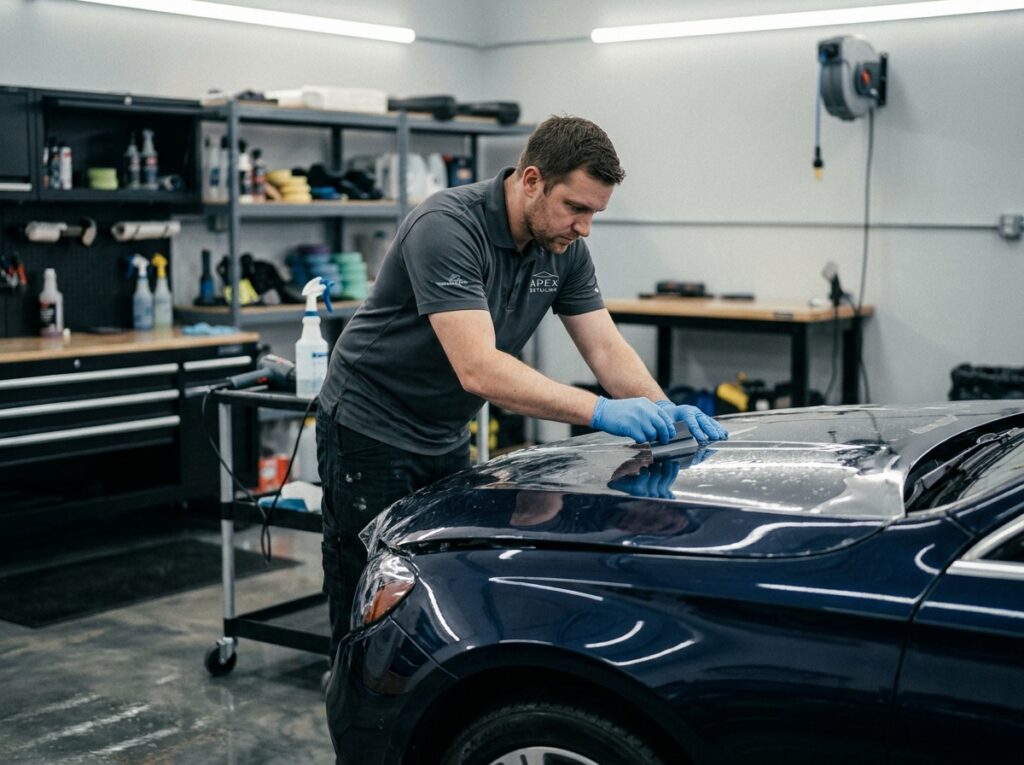
Applying a paint protection film to the most exposed areas (hood, front fenders, lower body) absorbs the impacts of gravel and friction before they reach the original varnish.
Car washing and regulations: constraints to know before taking out the hose
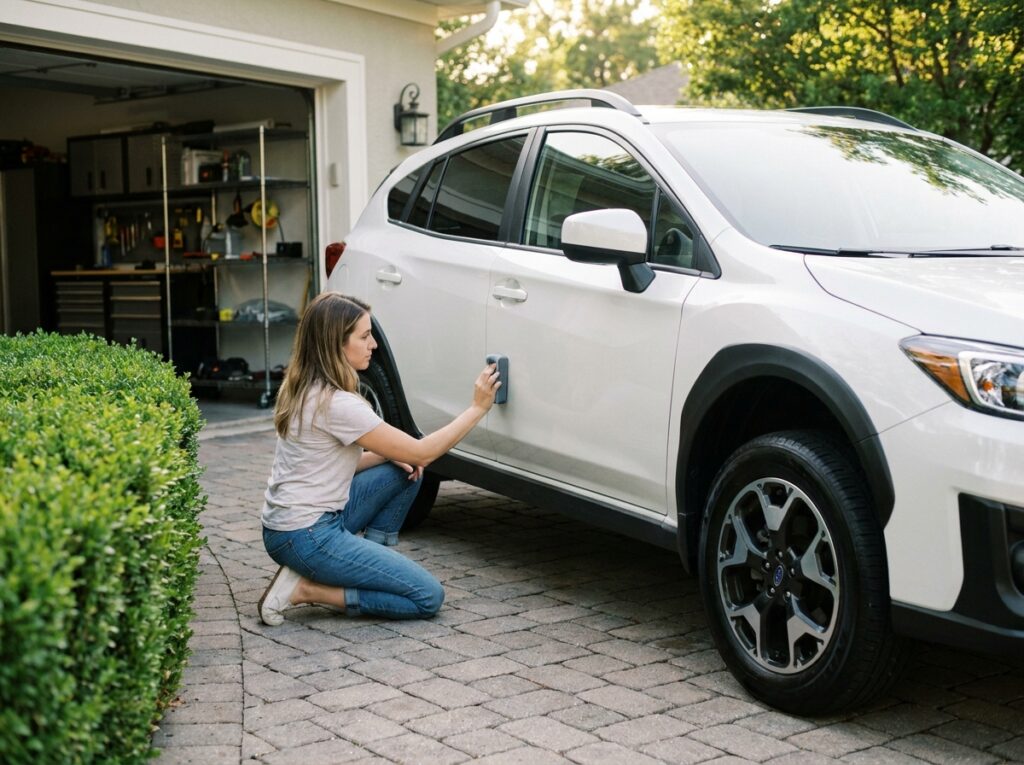
The reflex to wash with a jet in the driveway is increasingly regulated by law. Even outside of drought episodes, most departmental health regulations prohibit washing vehicles on public roads or private property as soon as wastewater can reach the stormwater system or the natural environment. The fine can reach 450 euros for an individual.
Since the summer of 2024, restrictions have tightened further. Many departments enforce the prohibition of washing cars at home as soon as the drought alert level reaches “alert,” with a general ban in “reinforced alert” and “crisis” levels.
Decree No. 2024-796 of July 12, 2024, and the associated order, which came into effect on September 1, 2024, have revised the framework for using non-potable water (rainwater, greywater) for domestic purposes. The use of collected rainwater for washing a vehicle remains subject to strict conditions, particularly the absence of discharge into the natural environment.
Direct consequence: going to a professional car wash often becomes the only legal option. These facilities have water recycling systems compliant with regulations, which avoids any risk of fines.
Paint protection techniques: ceramic coating, wax, and film compared
Three main families of products compete in the car body protection market. Each meets a different need in terms of durability, cost, and level of protection.
- Carnauba wax offers a warm and deep finish, but its durability rarely exceeds two to three months. It protects against UV rays and facilitates water runoff, but does not withstand mechanical impacts.
- The ceramic treatment (coating) forms a layer of silica or quartz on the varnish. Its hardness exceeds that of wax, and its durability is measured in years. The surface becomes hydrophobic, reducing the adhesion of contaminants and simplifying washing.
- The protection film (PPF, for Paint Protection Film) is a transparent thermoplastic polyurethane film applied to the bodywork. It absorbs gravel impacts, resists light scratches, and can be replaced without affecting the original paint. Some high-end films incorporate a self-healing function under heat.
Ceramic coating and PPF do not exclude each other. A film applied to impact zones, combined with a coating on the rest of the bodywork, offers comprehensive protection at a controlled cost compared to a full wrap.
Regular maintenance: actions that preserve the varnish between protections
Applying a coating or film does not exempt one from appropriate maintenance. The washing method is as important as the frequency.
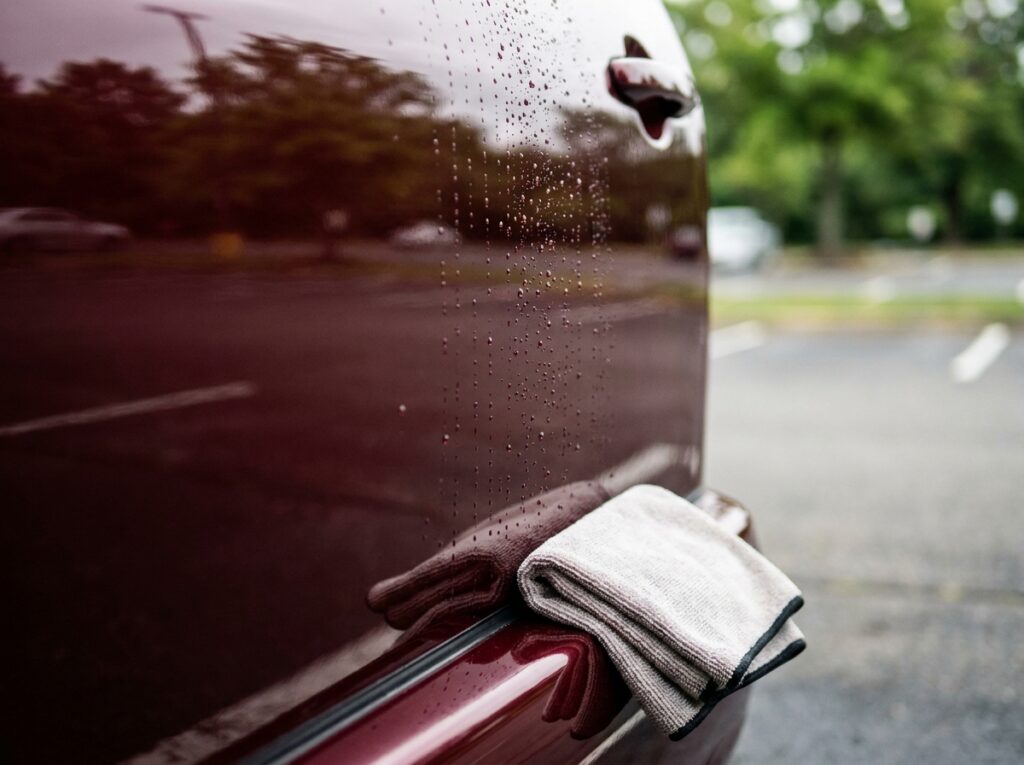
The “two-bucket” technique limits micro-scratches: one bucket contains soapy water, while the other is used to rinse the wash mitt after each pass on the bodywork. Abrasive particles remain in the rinse bucket instead of returning to the paint.
Drying with a long-pile microfiber, without excessive pressure, avoids streaks and unnecessary friction. Air drying leaves mineral marks that, when repeated, permanently mark the varnish.
Some principles to follow between each wash:
- Never wash in direct sunlight: water dries too quickly and concentrates minerals on the surface.
- Remove droppings and resin within 24 hours, using a dedicated decontaminating product rather than rubbing dry.
- Apply a maintenance spray (detailer) every two to three weeks to revive the hydrophobic effect of the coating.
- Avoid roller washes, which accumulate abrasive residues from one vehicle to another.
Parking and exposure: an underestimated factor for the bodywork
A vehicle parked outdoors without protection suffers more degradation at rest than when driving. UV rays act continuously, morning dew leaves acidic residues, and temperature variations cause micro-expansions of the varnish.
Parking in the shade or under a shelter significantly reduces the aging of the paint. A closed garage remains the best option. If not, a breathable protective cover limits exposure to UV rays and droppings, provided it is only installed on clean bodywork to avoid abrasive friction.
For vehicles parked for long periods (several weeks), a soft velvet indoor cover prevents condensation and dust from settling. Custom models fit the bodywork without floating in the wind, which avoids repeated friction on the varnish.
The aesthetic longevity of a car depends less on the number of products applied than on the consistency between the chosen protection, the washing method, and the parking conditions. A well-protected and properly maintained varnish retains its color depth for many years, far beyond what most motorists imagine.