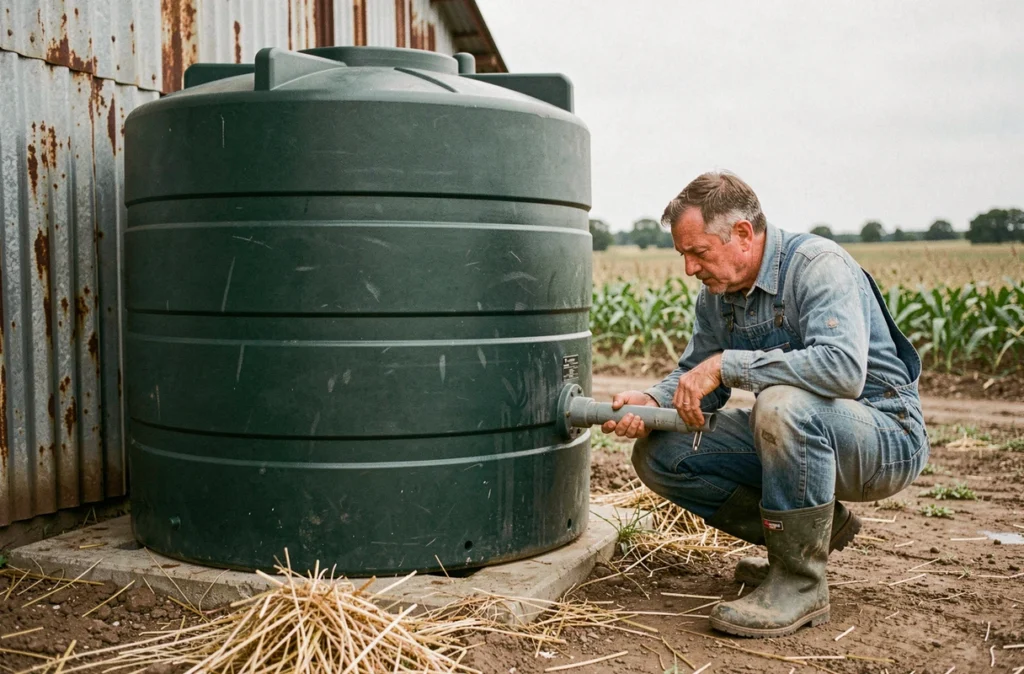
A rainwater harvesting tank intended for agriculture is not chosen like a simple garden collector. The volumes involved generally start at 1,000 liters and can reach 50,000 liters or more on some farms. The price depends on the material, installation method, and capacity, but also on specific agricultural constraints: UV resistance, compatibility with pressurized irrigation, or livestock watering.
Materials of agricultural tanks and direct impact on price
Before comparing quotes, it is essential to understand what causes the cost to vary. The material of the tank is the primary cost factor, well ahead of the volume.
High-density polyethylene (HDPE) dominates the market for above-ground and underground agricultural tanks. Rotomolded in one piece, it is resistant to shocks, UV rays, and corrosion. For a capacity ranging from 1,000 to 50,000 liters, the catalog prices observed in 2026 range from about 500 to 15,000 euros.
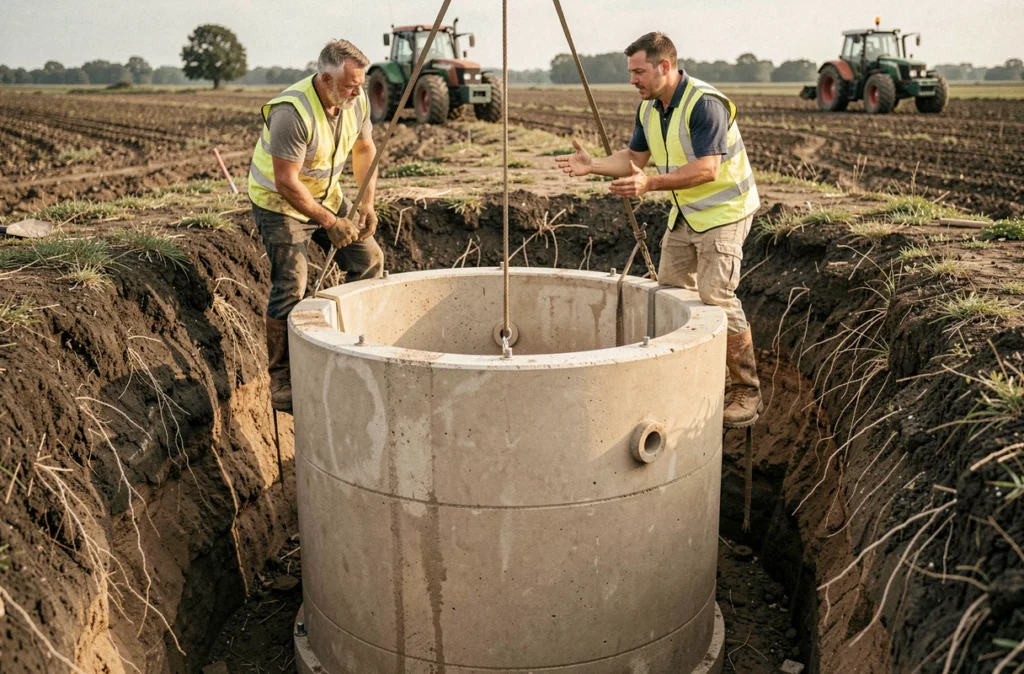
Concrete is still used for large underground volumes, particularly starting from 5,000 liters. Its weight requires heavier earthworks, but its longevity and thermal inertia are suitable for prolonged storage. The price ranges from 2,500 to 10,000 euros for tanks of 5,000 to 10,000 liters, excluding installation.
Flexible tanks, made from PVC or polyester-coated textile, represent a third option. They are deployed directly on the ground, without excavation, which reduces installation costs. For agriculture, prices range from 2,000 to 20,000 euros depending on the volume and intended use. A detailed comparison of agricultural prices on Génération Entreprise helps to place each technology within a coherent framework.
Flexible tank, underground tank, or above-ground reservoir: which choice for which farm
The type of tank is not chosen solely based on the purchase price. Each configuration involves installation, maintenance, and usage constraints that impact the overall budget.
Flexible tank placed on the ground
The flexible tank is suitable for farms with flat and stable land. It can be installed without foundations or heavy machinery, which reduces the commissioning cost to a few hundred euros in simple cases. However, it remains exposed to mechanical damage (from machinery, rodents) and its lifespan is generally shorter than that of a rigid tank.
Underground tank in HDPE or concrete
Burial frees up surface area, a real advantage for farms where every square meter counts. However, the additional installation cost (excavation, slab, connections) is a significant item: professional sources mention 1,000 to over 3,000 euros depending on soil type and site accessibility. On clay or sloped terrain, the excavation budget can exceed the price of the tank itself.
Above-ground HDPE reservoir
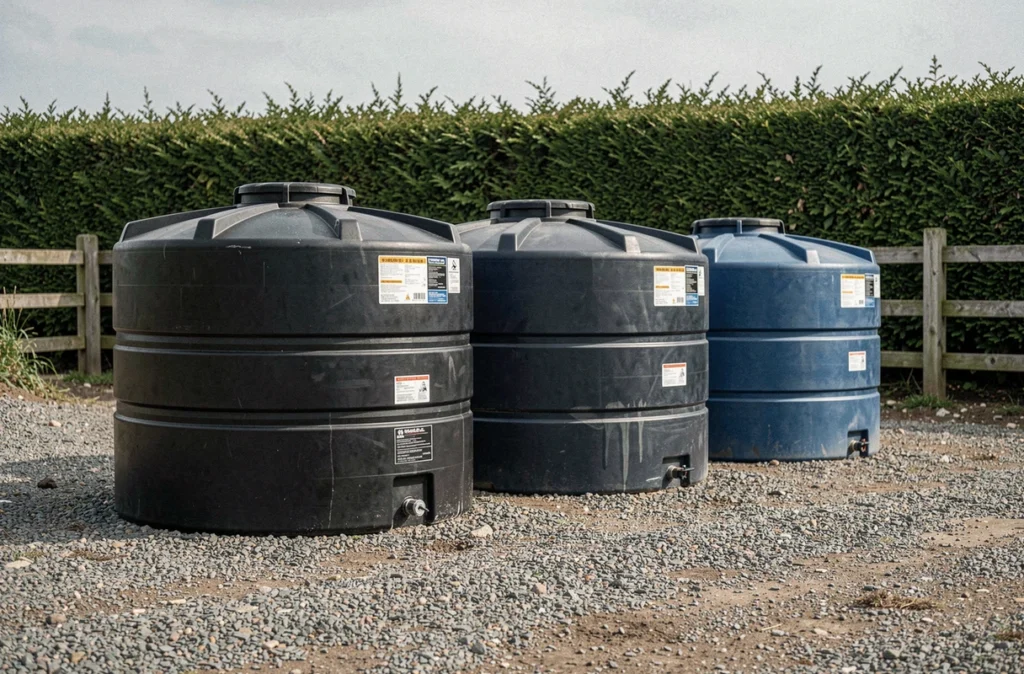
Vertical or horizontal HDPE tanks, placed on a slab or directly on stabilized ground, offer the best compromise between cost and ease of maintenance. They are available in capacities ranging from 300 to 13,000 liters. Their main drawback: exposure to frost in certain regions, which requires insulation or winter draining.
- Flexible tank: quick and inexpensive installation, but limited durability and vulnerability to mechanical damage.
- Underground tank: no surface footprint, excellent longevity, but installation costs can sometimes exceed the price of the tank.
- Above-ground reservoir: accessible maintenance and moderate purchase price, but sensitivity to frost and land use.
Overall budget for a rainwater harvesting agricultural installation
Focusing solely on the price of the tank gives a distorted view. The actual budget for a rainwater storage installation for agriculture includes several items that can double the initial bill.
The connection to gutters or collection surfaces (shed roofs, stabling) requires downspouts, filtering collectors, and sometimes a network of buried pipes. The distribution pump, essential for irrigation or pressurized watering, adds a few hundred euros at a minimum.
Annual maintenance is often an underestimated cost. For a 5,000-liter tank used in agriculture, the maintenance and treatment budget is estimated between 200 and 600 euros excluding tax per year. Over ten years, this amount can equal the purchase price of the tank.
Second-hand tanks for agriculture: a credible option under certain conditions
The second-hand market regularly offers IBC tanks of 1,000 liters at prices between 50 and 150 euros. For a farm looking for supplementary storage (cleaning, additional watering), this option significantly reduces the initial investment.
However, a few points of caution are necessary before any purchase:
- Check the nature of the product previously stored in the tank (some chemical residues make it unsuitable for agricultural water use).
- Inspect the condition of the valve, metal frame, and ensure there are no cracks on the inner wall.
- Plan for a complete cleaning before first use, especially if the water is intended for animal watering.
A well-inspected second-hand IBC can serve several seasons on a farm, but it does not replace a large-capacity tank for continuous irrigation. Its use remains supplementary.
The choice of a rainwater harvesting tank for agriculture depends on a trade-off between purchase cost, installation cost, and maintenance cost over time. A flexible tank at 3,000 euros installed in one day may end up being cheaper over ten years than an underground tank at 2,500 euros whose installation and maintenance costs will have tripled.
Considering the total cost over the lifespan of the installation remains the only reliable method for sizing the budget.