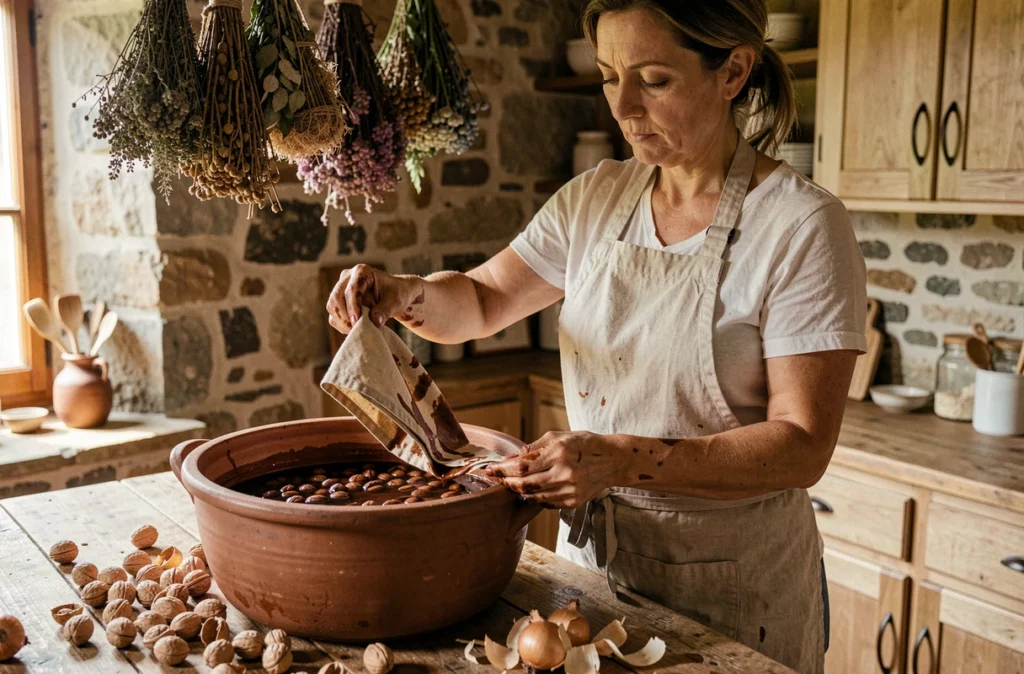
Natural brown dye comes from plant-based pigments found in everyday ingredients such as walnut husks, onion skins, coffee grounds, and black tea. These dye materials, rich in tannins, bond to textile fibers through a process of simmering followed by a prolonged soak. The result depends on the ingredient you choose, as well as the fiber, mordant, and soaking time.
Textile fibers and mordanting: what determines how well brown dye holds
Before choosing a dye, it helps to understand why some fabrics take color better than others. Wool and silk, which are animal fibers, absorb plant-based pigments more readily. Cotton and linen, which are plant fibers, need more thorough preparation to retain the color.
This preparation is called mordanting. A mordant is a substance that creates a chemical bond between the fiber and the pigment. Alum (aluminum potassium sulfate), available at pharmacies, is the most common choice for home dyeing. Dissolve the mordant in hot water, submerge the damp fabric, then keep it at a gentle simmer for about an hour before letting it cool.
To understand how to dye fabric a natural brown, it’s important to know that this mordanting step determines how well the color holds up in the wash. Without a mordant, most plant-based dyes bleed during the very first rinse.
One often-overlooked point: the mordant also changes the resulting shade. An iron treatment, for example, darkens and dulls colors, shifting them toward brown or gray. On an already brown base, iron produces a very dark brown, almost chocolate. Be careful, though: too much iron can weaken textile fibers.
Everyday ingredients that dye fabric brown
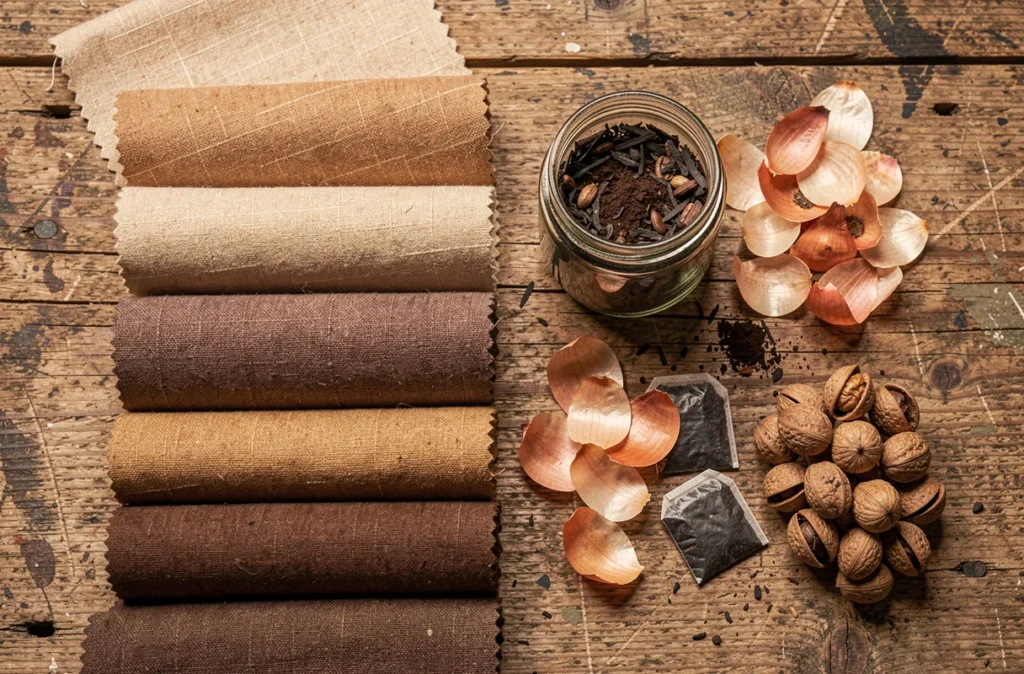
Not all natural ingredients produce the same shade of brown. The color can range from warm beige to deep brown, depending on the raw material and its concentration in the dye bath.
Walnut hulls and bark
Walnut hulls (the green outer covering around the shell) are the most reliable source for achieving a deep, long-lasting brown. Rich in tannins, they dye wool without a mordant, although mordanting beforehand improves colorfastness on cotton. You can find them in fall beneath walnut trees or as a powder in craft stores.
Yellow onion skins
Yellow onion skins, saved as you cook, produce shades ranging from golden to coppery brown. The more skins you use relative to the weight of the fabric, the browner the color will be. They’re available year-round and cost nothing, since they’re a food waste product.
Coffee grounds and black tea
Coffee grounds produce a soft, slightly grayish brown. Black tea creates a warmer brown with caramel tones. Both ingredients contain less pigment than walnut hulls, so you’ll need generous quantities and a longer soak to achieve a rich color.
- Walnut hulls: dark brown to chocolate, with good colorfastness on animal fibers and prepared plant fibers
- Yellow onion skins: golden to coppery brown, with intensity proportional to the amount used
- Coffee grounds: soft grayish brown, requiring a high concentration and a prolonged soak
- Black tea: warm caramel brown, used much like coffee but with a more orange-toned result
How to dye fabric brown, step by step
The fabric should be clean, with no sizing or fabric softener, and already mordanted if you’re working with cotton or linen. Work with damp fabric: wet fibers absorb pigment more evenly.
Preparing the dye bath
Place the dye material in a large pot reserved for this purpose—not for cooking. Cover it with water and simmer for about an hour. This simmering process extracts the pigments into the water. Then strain out the solid residue to obtain a liquid dye bath.
The ratio of dye material to fabric weight determines the color’s intensity. For a rich brown, use at least as much dye material by weight as the dry fabric. For coffee grounds or tea, double that amount.
Soaking and heating
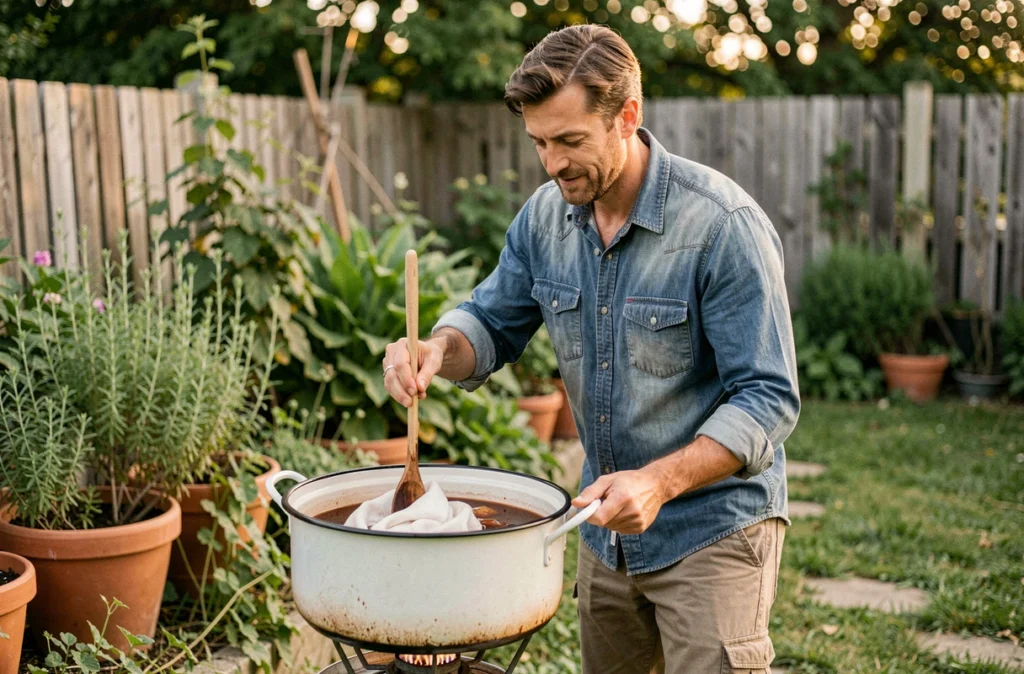
Submerge the damp fabric in the strained dye bath. Bring it back to a simmer, then keep it over low heat. Stir regularly with a wooden spoon to prevent uneven patches. Soaking time varies: one hour gives a light shade, while several hours produce a deeper brown.
Then let the fabric cool in the bath. Some dyers leave it to soak overnight to increase color uptake.
Caring for naturally dyed brown fabric: how to prevent color bleeding
Plant-based dyes are less washfast than synthetic dyes. A few precautions can help the color last longer.
First, rinse the dyed fabric in cold water until the water runs clear. This initial rinse removes excess unfixed pigment. For subsequent washes, use a mild detergent without bleaching agents or chlorine bleach, which would destroy the natural pigments.
- Wash in cold or lukewarm water, never hot
- Avoid optical brighteners found in some conventional detergents
- Dry in the shade, as UV rays speed up fading in plant-based dyes
Testing a fabric scrap first and washing the sample separately lets you check for color bleeding before dyeing the entire piece. This precaution helps avoid unpleasant surprises, especially with cotton, which holds pigments less effectively than wool.
The color will gradually fade with washing. This is a characteristic of plant-based dyes, not a flaw. Every naturally dyed piece changes over time, and that’s part of the appeal of this traditional craft.