The women’s fashion trends this season mark a clear break from the uniform minimalism of recent years. Textured maximalism, material contrasts, and a bolder color palette are redefining the chic wardrobe. We decode the stylistic axes that truly matter for building modern and wearable silhouettes.
Material Contrasts: The Technical Lever of Chic Style This Season
The principle is simple, but its execution requires rigor: combine two materials with opposing textures within the same silhouette. Leather and satin, tweed and knit, suede and fluffy materials make up the combinations we observe in the autumn-winter 2026-2027 collections.
This approach allows for the modernization of a classic suit or coat without multiplying pieces. Leather pants worn under a tweed jacket create a visual tension that color alone does not produce. The contrast is felt through touch before it is seen.
The key lies in balancing volumes. A rigid material (leather, tweed) calls for a fluid material (satin, fine knit) to avoid a suit-like effect. Specialized boutiques like eva-mode.fr offer pieces that facilitate these combinations without requiring an extravagant budget.
We recommend limiting the play of materials to two, at most three, per outfit. Beyond that, the silhouette loses clarity and veers into disguise.
Monochrome Silhouette Enhanced by Volumes and Construction
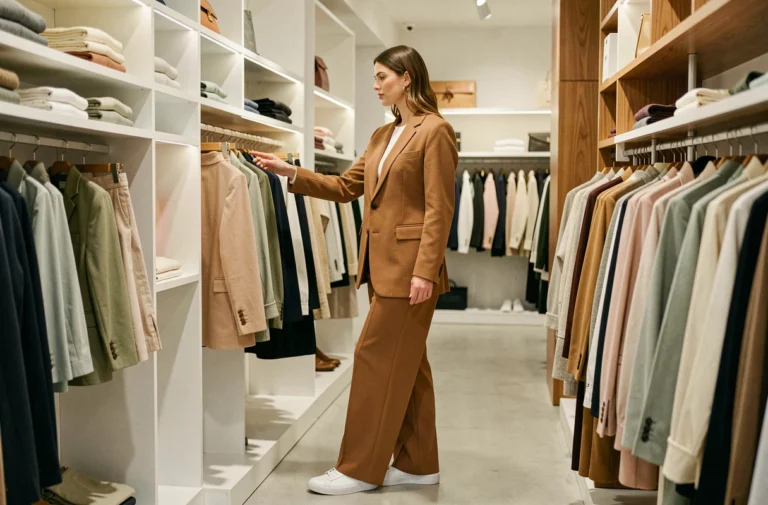
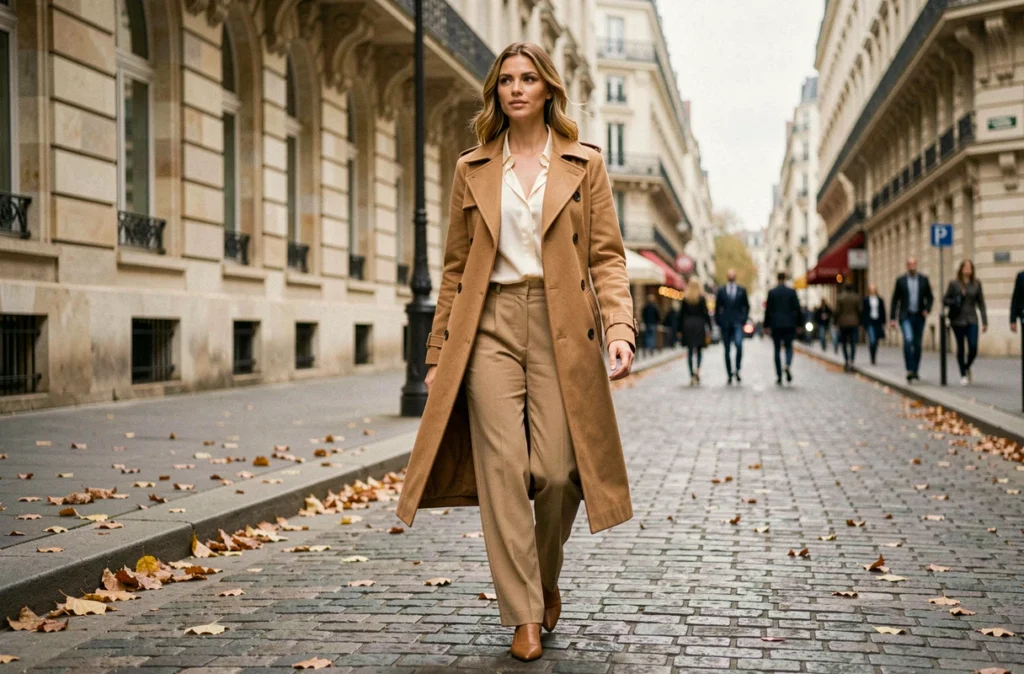
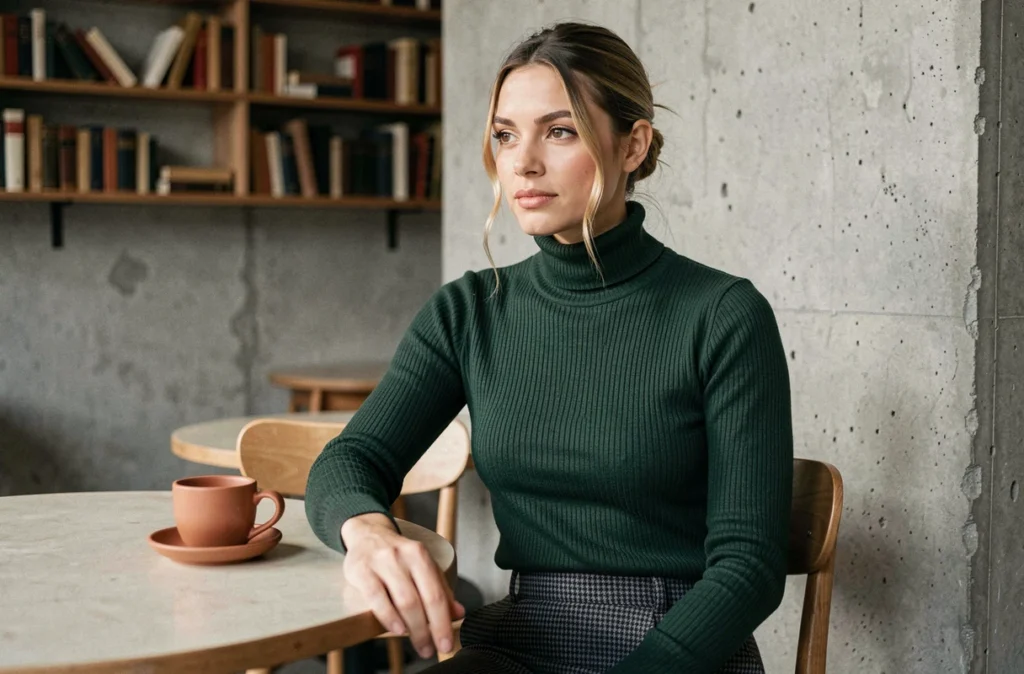
Monochrome no longer means flat uniformity. The current trend is to wear a single color while varying textures, thicknesses, and proportions. A total beige look combining a ribbed knit turtleneck, structured wide-leg pants, and a suede jacket produces a sophisticated result that layering classic neutrals cannot achieve.
The colors that work best in this logic are intense tones rather than pastels. Chocolate brown, deep burgundy, olive green, and midnight blue offer enough depth for the variations in material to stand out.
How to Avoid the Pajama Effect in Monochrome
The classic trap of the total look lies in the lack of structure. Without a break point, the silhouette flattens. Three levers correct this issue:
- Define the waist with a thin belt or a fitted piece, even under an oversized jacket
- Play with lengths: a cropped top paired with high-waisted pants creates a sharp proportion
- Introduce an accessory in a different finish (matte leather against shiny fabric, for example)
A successful monochrome look relies on construction, not on the color itself.
Flat Shoes in Sophisticated Looks: What Changes Practically
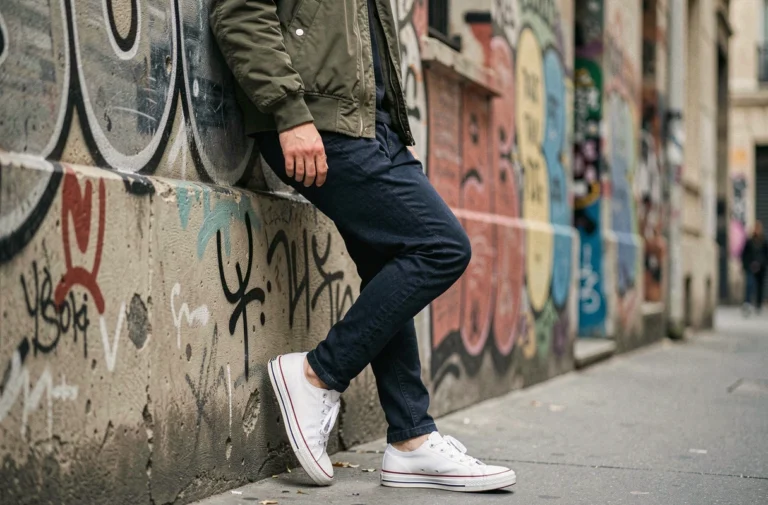
Flat shoes are gaining legitimacy in dressed-up outfits. Jazz shoes, Camargue boots, and models with thin soles are now integrated into silhouettes that were previously reserved for heels.
This shift alters the proportions of the entire outfit. Wide-leg pants that looked good with a seven-centimeter heel require a tailored hem to work with flat boots. The length of the pants becomes a technical parameter that should not be overlooked.
With a midi skirt, Camargue boots create a continuous vertical line that elongates the leg. With a long, flowing dress, jazz shoes maintain lightness without weighing down the base. The choice of flat shoe determines the fall of the entire silhouette.
Key Pieces for the Autumn-Winter Wardrobe: Flowing Dress, Wide Pants, and Structured Jacket
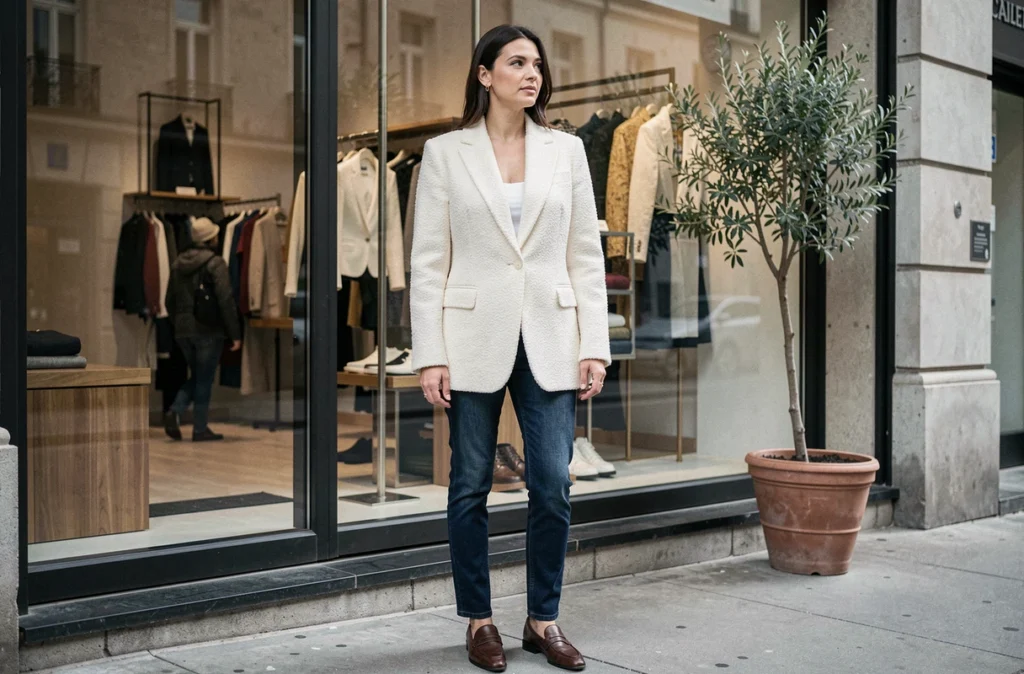
Three pieces concentrate the research and proposals of the collections this season. The long flowing dress, driven by the poetcore trend, remains a strong axis. The structured wide-leg pants with a marked waist emerge as an alternative to slim jeans. The short colored jacket provides the necessary contrast point for neutral outfits.
Long Flowing Dress: The Colors That Work
Orange, vibrant pink, olive green, and sky blue dominate the proposals. The flowing dress benefits from being worn with discreet accessories to let the material and color work on their own. A structured bag and flat shoes are sufficient.
Structured Wide Pants: Cut and Proportions
The ideal cut combines a marked waist and ample fall without excess. The structured wide pants replace barrel jeans as a staple piece of the chic wardrobe. They are worn with a tucked-in sweater or a fitted blouse to maintain a visible waistline.
Short Jacket: The Role of Color
The short colored jacket (butter yellow, terracotta, Klein blue) serves as a statement piece over a monochrome base. It should remain short, above the hip, to avoid breaking the proportion created by the wide pants.
Transparency and Sustainability: What Regulations Change for Style
Regulatory discussions in France now focus on information regarding manufacturing locations and the modulation of ecological contributions based on the scale of collections. Brands producing very large volumes are directly targeted by strengthened obligations.
For consumers, this translates into a more attentive reading of labels and a shift towards durable pieces rather than constant renewal. Incentives for repair also change the relationship with clothing: investing in a well-constructed jacket or a pair of durable fabric pants becomes both a stylistic and economic choice.
- Check the manufacturing location indicated on the label, made more visible by new obligations
- Favor natural materials or blends with a low synthetic proportion for longevity
- Consider the reparability of the piece: accessible seams, removable lining, replaceable buttons
This season, chic and modern style relies less on the accumulation of trends and more on choices of construction, materials, and proportions. A wardrobe centered around well-cut pieces, combined by contrasting textures and worn with flat shoes, produces a more coherent result than a closet scattered among ten micro-trends.