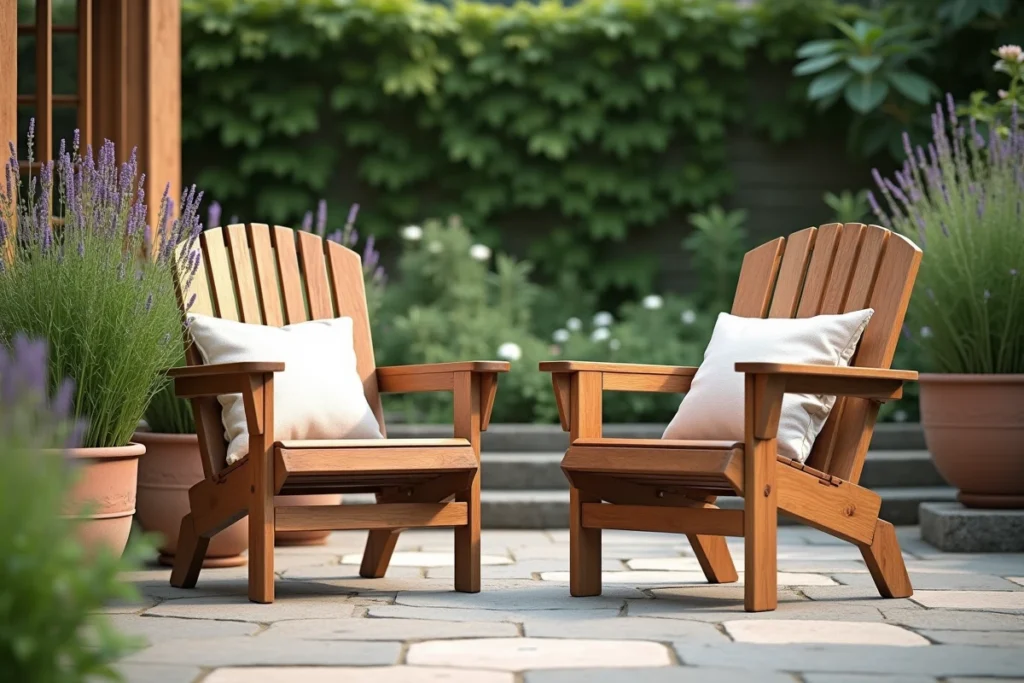
A garden chair made of wood combines a rigid supporting structure and a seat surface that adapts to climatic constraints (UV, rain, frost). Choosing a model that is both comfortable and durable involves balancing the type of wood, the geometry of the seat, and the level of maintenance acceptable over several seasons.
Wood Type and Natural Weather Resistance
Not all types of wood react the same way to moisture and sunlight. Teak, acacia, and eucalyptus are among the most commonly used woods for outdoor furniture, but their properties differ significantly.
Teak is naturally rot-resistant due to its high oleoresin content. It grays over time without losing its structural integrity. Acacia, more affordable, offers good density and resists water reasonably well, provided it is regularly oiled. Eucalyptus falls in between: dense, relatively stable, but more prone to cracking if it dries too quickly after a rain shower.
The determining factor remains the wood usage class. For outdoor use without direct contact with the ground, wood classified as 3 or 4 is suitable. Teak naturally reaches class 4, while acacia and eucalyptus generally fall into class 3, which requires surface treatment to extend their lifespan.
To delve deeper into these distinctions and explore the garden universe on Ambiance Jardin, each type of wood is detailed with its specific maintenance constraints.
Seat Geometry and Real Comfort of a Wooden Chair
A wooden chair without cushions can be perfectly comfortable if its geometry is well designed. The angle of the backrest, the seat depth, and the height of the armrests determine the posture and the time one can spend sitting without discomfort.
Backrest Angle and Seat Depth
A slightly reclined backrest promotes a relaxed position. Adirondack-style chairs take this logic further with a pronounced angle, suitable for reading or prolonged resting. For table use, a more vertical backrest and a shallower seat allow for easy standing up.
A chair intended for relaxation is not suitable for dining, and vice versa. Defining the primary use before purchase avoids frustrating compromises.
Armrests and Seat Slats
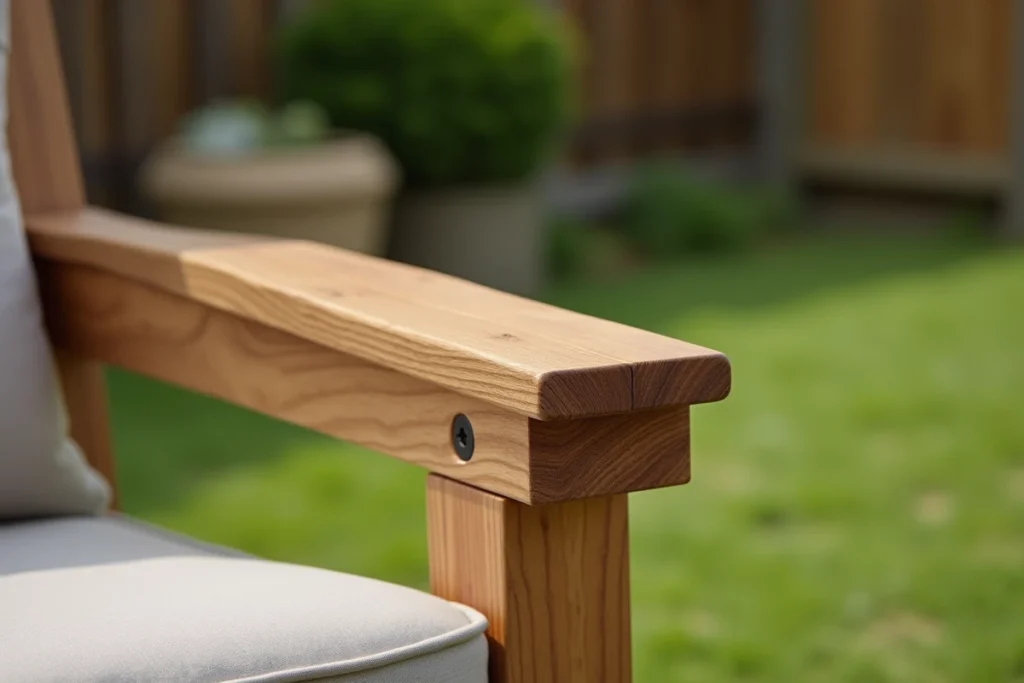
Wide, flat armrests add comfort while serving as a glass holder. Their height should allow the forearms to rest naturally without raising the shoulders.
Slightly curved seat slats better conform to body shape than a flat surface. Some models incorporate profiled slats that distribute weight more evenly, reducing pressure points even without cushions.
Wood Traceability and European Regulation RDUE
The FSC and PEFC labels guarantee responsible forest management, but a major regulatory change goes beyond these certifications. The European Regulation on Deforestation (RDUE) will prohibit the marketing of wood products that have contributed to deforestation after December 31, 2020.
The implementation date is set for December 30, 2026, for most companies, and June 30, 2027, for micro and small enterprises. In practical terms, wooden garden chairs will need to be accompanied by enhanced traceability proving zero deforestation origin, beyond just the logo on the label.
This regulation changes the sustainability criterion: it is no longer just about whether the wood withstands the elements, but also whether its production has not destroyed forest ecosystems. Checking RDUE compliance at the time of purchase will become as relevant as verifying the wood type or usage class.
Seasonal Maintenance of Outdoor Wooden Furniture
The durability of a wooden chair depends as much on maintenance as on the chosen wood type. Neglected teak over several years can crack, even if it does not rot.
- Apply an oil suitable for the wood type (teak oil, hard oil for acacia) once or twice a year, ideally in spring and late summer, to nourish the wood and limit graying.
- Clean with soapy water using a soft brush before each oiling, avoiding high-pressure cleaners that open the wood fibers and accelerate degradation.
- Store chairs in a sheltered place or under a breathable cover during the cold season, especially for acacia and eucalyptus, which do not tolerate repeated freeze-thaw cycles well.
- Lightly sand gray or rough surfaces with fine-grit sandpaper before re-oiling, so that the product penetrates properly.
A well-maintained teak chair retains its mechanical properties for several decades. Acacia and eucalyptus require more regular upkeep but remain solid options for those who accept this maintenance rhythm.

Solid Wood Chair or Composite Wood: What the Price Doesn’t Tell You
Composite wood (a mix of wood fibers and plastic resin) is often presented as a maintenance-free alternative to solid wood. Its purchase price sometimes approaches that of acacia, complicating the comparison.
The composite cannot be sanded, oiled, or repaired. A deep scratch or discoloration remains permanent. Solid wood, on the other hand, can be restored: sanding followed by oiling brings a weathered chair back to a like-new appearance.
Comfort also differs. Solid wood remains cool to the touch in hot weather, while composite accumulates heat in direct sunlight. For a chair intended for a south-facing terrace, this difference is noticeable in summer.
The choice between the two depends on the time commitment one is willing to give to their furniture. Composite is suitable for those who want to set it and forget it. Solid wood appeals to those who prefer a living piece of furniture that patinas and improves with the seasons, provided they dedicate a few hours each year to its care.