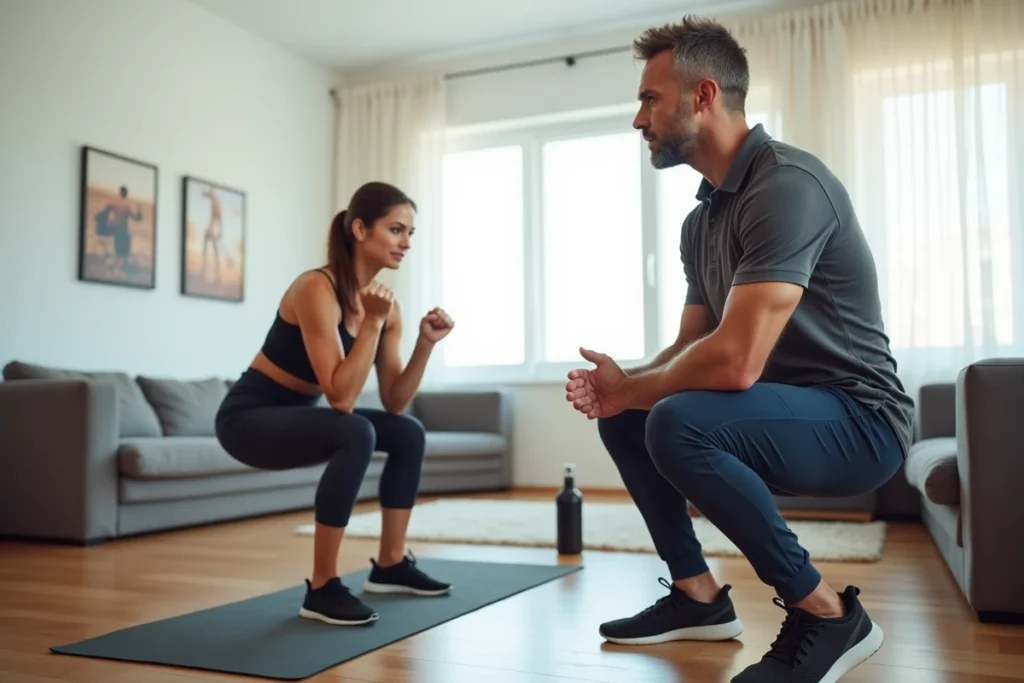
A home fitness coach is a certified sports educator who designs and supervises personalized training sessions in the client’s living space. Unlike a simple fitness instructor, this professional tailors each exercise to the individual’s physical condition, goals, and material constraints. Choosing the right fitness coach for home sessions relies on verifiable criteria, starting with the legal framework that governs this activity.
Professional card and diploma: the legal foundation to verify before any session
The profession of sports educator is regulated in France. Since the law of March 2, 2022, on sports governance, state services (DDCS/SDJES) have strengthened controls on the possession and declaration of the professional sports educator card. Any coach working at home must have one.
This card certifies that the professional holds a diploma listed among the certifications that grant the right to teach sports. The most common are the BPJEPS Activities of the Form and the STAPS License. The card number must be presented upon the client’s request.
Before signing a contract or paying for a first session, ask for this number. You can verify it on the Ministry of Sports website. A coach who dodges this question or claims that the card is not necessary for home coaching does not comply with the legal framework. Moving on to another candidate is then the only reasonable option. Platforms like moncoachadomicile.com facilitate this search by listing coaches whose qualifications have already been verified.
Specialization of the fitness coach: matching the profile to your goals
Not all certified coaches are suitable for every goal. A BPJEPS Activities of the Form covers general physical preparation, fitness, and bodybuilding. However, if you are looking for support post-rehabilitation or related to a chronic condition, you need a coach trained in health sports.
The “sports on prescription” system, included in the Public Health Code and relayed by the ARS, has encouraged the emergence of coaches specialized in adapted physical activity (APA). Some of these programs may be partially covered by medical prescription.
Three typical profiles to distinguish
- The generalist coach (BPJEPS or STAPS): suitable for getting back in shape, weight loss, and muscle strengthening. This is the most common choice for regular home sessions.
- The health sports coach (additional APA training): recommended for individuals suffering from chronic illnesses, seniors, or those returning to activity after an injury. His training includes managing medical contraindications.
- The physical trainer: performance-oriented, he works with athletes who already have a level of practice and competitive goals. Less relevant for standard home fitness.
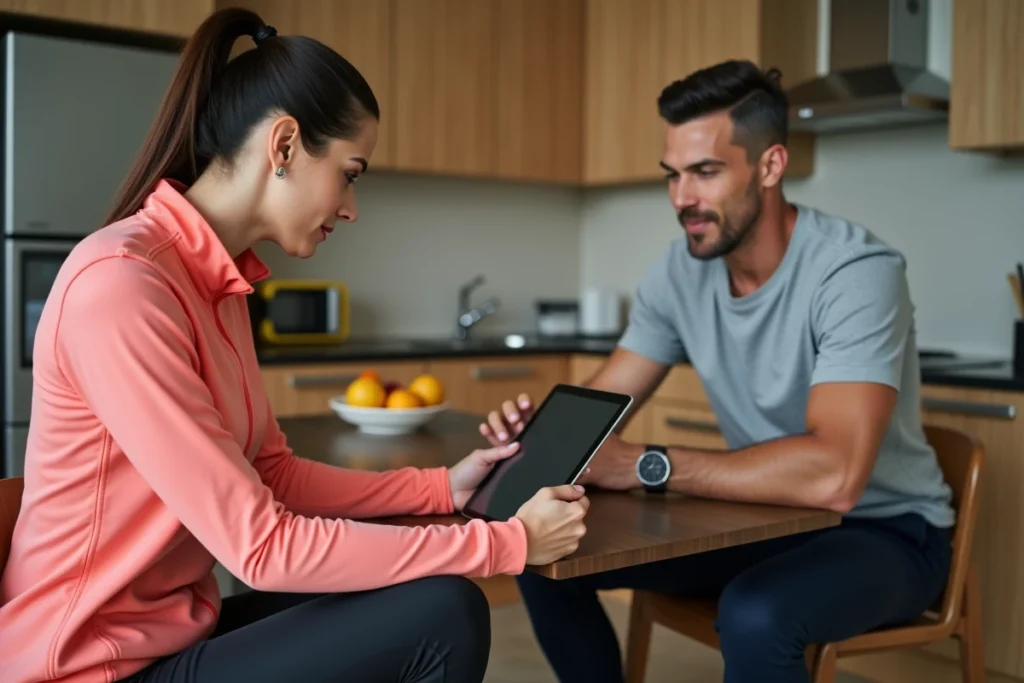
During the first exchange, a good coach asks specific questions about your sports history, any pain you may have, and your daily habits. If he directly proposes a program without a prior assessment, it is a warning sign.
First meeting with a home coach: what it reveals
The first appointment is a decisive filter. It is not yet about sweating, but about evaluating the coach’s method and relational compatibility. A competent coach dedicates this session to a physical assessment and defining measurable goals.
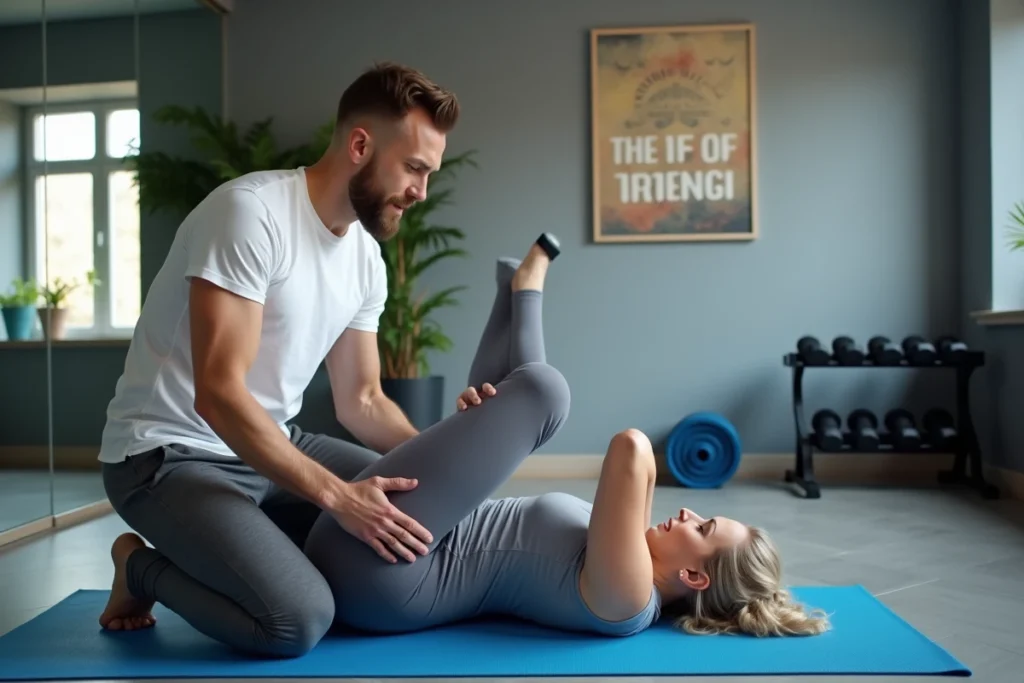
The assessment generally includes a postural evaluation, joint mobility tests, and some reference exercises to gauge your physical condition. The coach should also inspect the available space in your home: floor area, ceiling height, presence or absence of equipment.
Points to observe during this first meeting
Punctuality and attire are simple yet reliable indicators of professional seriousness. Beyond appearance, listen to how the coach formulates his proposals. A rigorous professional speaks in terms of progression over several weeks, not in promises of spectacular short-term results.
Ask about the recommended frequency. For a general fitness goal, most effective programs revolve around two to three sessions per week. A coach who pushes for five weekly sessions right from the start without assessing your recovery likely lacks pedagogical perspective.
Follow-up between sessions and adaptation of the training program
Home coaching is not limited to the time spent together. The quality of follow-up between sessions distinguishes professional support from a simple private lesson. Some coaches provide additional exercise sheets, while others use apps to track progress and adjust loads.
The program must evolve. If you are doing the same exercises with the same sets after six weeks, the coach is not fulfilling his adaptation mission. Progression involves a gradual increase in intensity, variations in exercises, and planned recovery phases.
- Ask if the coach offers written or digital support between sessions (detailed program, corrective videos, follow-up messages).
- Check that the program includes re-evaluation milestones, typically every four to six weeks.
- Ensure that the coach adjusts exercises based on your feedback (pain, fatigue, scheduling constraints) and not just according to a fixed plan.
A final often overlooked point: pricing transparency. Rates vary according to geographical area, specialization, and session duration. A serious coach announces his prices from the first contact and details what the service includes (assessment, session, intersession follow-up). The absence of a clear quote before commitment should alert you as much as the absence of a diploma.
Choosing a home fitness coach relies on three concrete filters: legal compliance (verifiable professional card), alignment between his specialization and your goals, and the rigor of his follow-up beyond sessions. A coach who meets these three conditions transforms home training into a framework as structured as in a gym, with the advantage of flexibility.