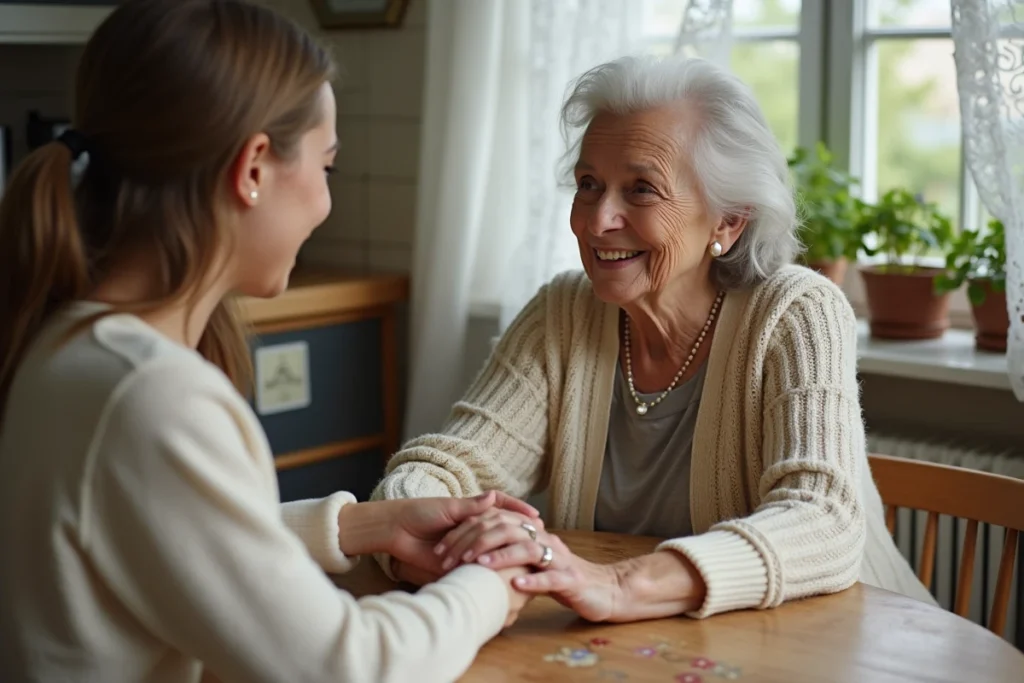
In Dutch, oma refers to grandmother. The word is pronounced “OH-mah” and is used both in family conversations and in educational materials for newcomers. Unlike grootmoeder, its formal variant reserved for administrative or genealogical contexts, oma belongs to the affectionate and everyday register of the language.
Oma and grootmoeder: two registers for the same family relationship
Dutch clearly distinguishes the familiar term from the official one. In civic integration courses (inburgering), educational resources present opa and oma as the most common forms to refer to grandparents, while grootvader and grootmoeder appear in formal written documents.
This distinction is not anecdotal. It reflects how Dutch speakers structure their interactions: a child calls their grandmother oma from their first words, and this term does not change as they grow up. There is no shift to grootmoeder with age or maturity of the speaker.
To delve deeper into the meaning of oma in Dutch, it is also worth noting that the word functions without an article in direct address. One simply says “Oma, kom je eten?” (Oma, are you coming to eat?) as one would use a first name.
This dual system (oma/grootmoeder) is found in other Germanic languages, but Dutch is distinguished by the stability of the familiar term: no dominant regional variant, no significant competition with another diminutive.
Germanic origin of the word oma and its relation to German
Oma comes from the same Germanic lexical stock as its German equivalent. The two languages share this term, inherited from an affectionate form that has prevailed over more analytical constructions like grootmoeder (Dutch) or Großmutter (German).
In German, Oma carries the same affectionate connotation and familiar usage. The proximity is such that German-speaking individuals from different countries understand each other unambiguously regarding this word. This lexical convergence illustrates a common phenomenon in Germanic languages: affectionate kinship terms resist dialectal variation better than everyday vocabulary.
The prefix over- to trace back generations
Dutch uses the prefix over- to refer to previous generations. The grandmother, whether paternal or maternal, remains oma, but the great-grandmother becomes overgrootmoeder. This prefixing system also applies to the masculine: overgrootvader for the great-grandfather.
The logic is clear: over- signals that one is “going beyond” one generation. For the great-great-grandmother, one simply adds bet- (betovergrootmoeder), although this term is rarely used outside of genealogy.
- Oma: grandmother, familiar and everyday register
- Grootmoeder: grandmother, formal and administrative register
- Overgrootmoeder: great-grandmother, all situations
- Betovergrootmoeder: great-great-grandmother, genealogical use
Oma in Dutch and Flemish cultural life
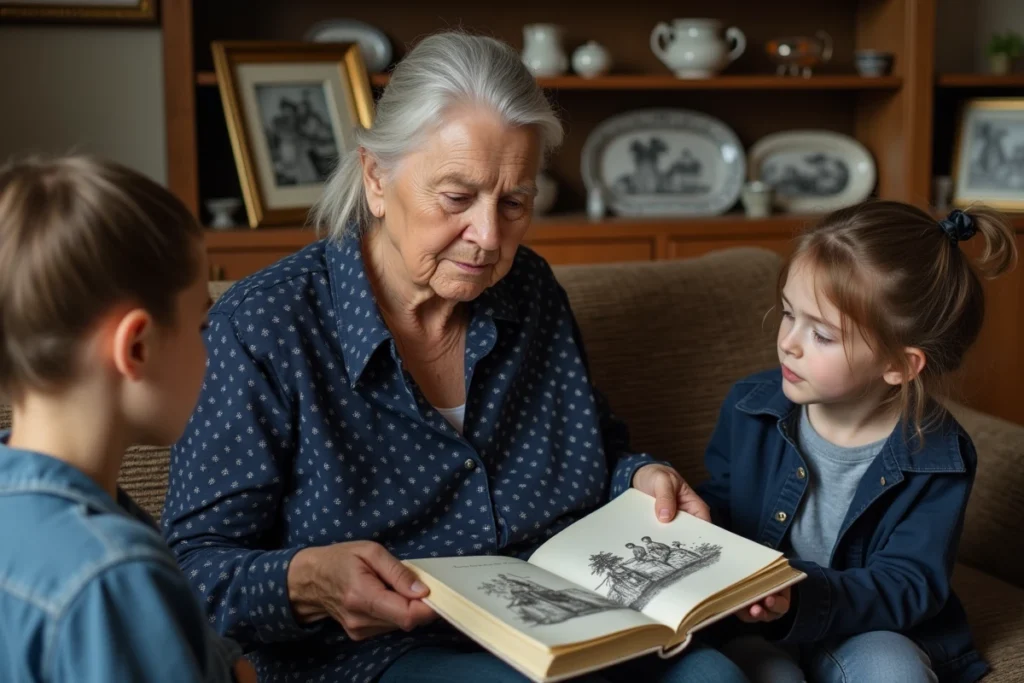
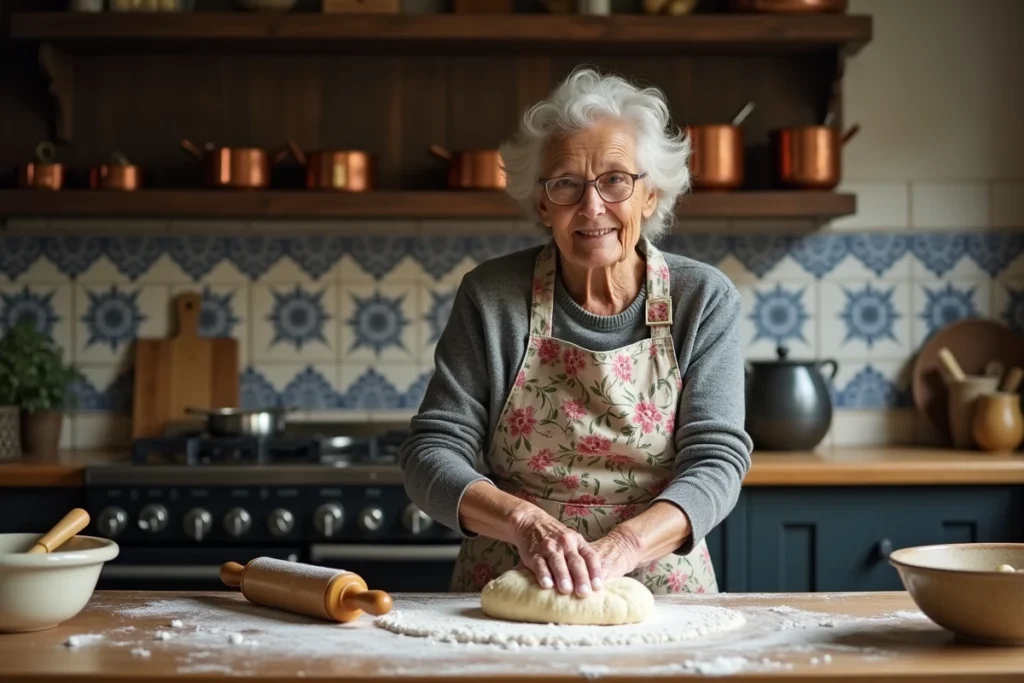
The term oma goes beyond the strictly linguistic framework. In the Netherlands and Flanders, it conveys a set of representations related to family transmission, cooking, and domestic memory.
Oma appears in the titles of cookbooks, television shows, and popular expressions. The phrase “bij oma” (at oma’s) evokes a place of comfort, abundant food, and family stories. This is not a metaphor: grandmothers often play an active role in caring for grandchildren in the Netherlands.
An old term that has supplanted opoe
Dutch once had the word opoe to refer to grandmother. This term, now perceived as archaic, has gradually given way to oma in common usage. Discussions among native speakers confirm that opoe now belongs to the literary or humorous register, with no real use in contemporary family life.
This replacement can be explained by the phonetic simplicity of oma (two open syllables, easy to pronounce for a young child) and the influence of German, where Oma was already firmly established.
Oma beyond the Netherlands: diaspora and linguistic borrowings
The word oma circulates well beyond Dutch and German borders. In diaspora communities, in South Africa (where Afrikaans descends from Dutch) and in some families of Surinamese origin, the term remains alive across generations.
Afrikaans has retained oma and ouma as common terms for grandmother. This persistence reflects the strength of the word in the daughter languages of Dutch, even after several centuries of geographical separation.
- In Afrikaans: ouma (variant of oma), used daily in South Africa
- In Suriname: oma remains understood in families of Dutch heritage
- In German-American communities: Oma coexists with Grandma without confusion of register
This international diffusion distinguishes oma from most Dutch kinship terms, which remain confined to their original linguistic area. The word has crossed borders because it carries a universally readable emotional charge: two soft syllables, an open sound, a direct link to childhood.
Dutch offers with oma a clear linguistic case study: a short word, stable for several generations, that has supplanted its competitors (opoe, grootmoeder in oral usage) and continues to travel with the families that pass it on. Its strength lies less in its etymology than in its function, that of the first word a child associates with a specific person.