
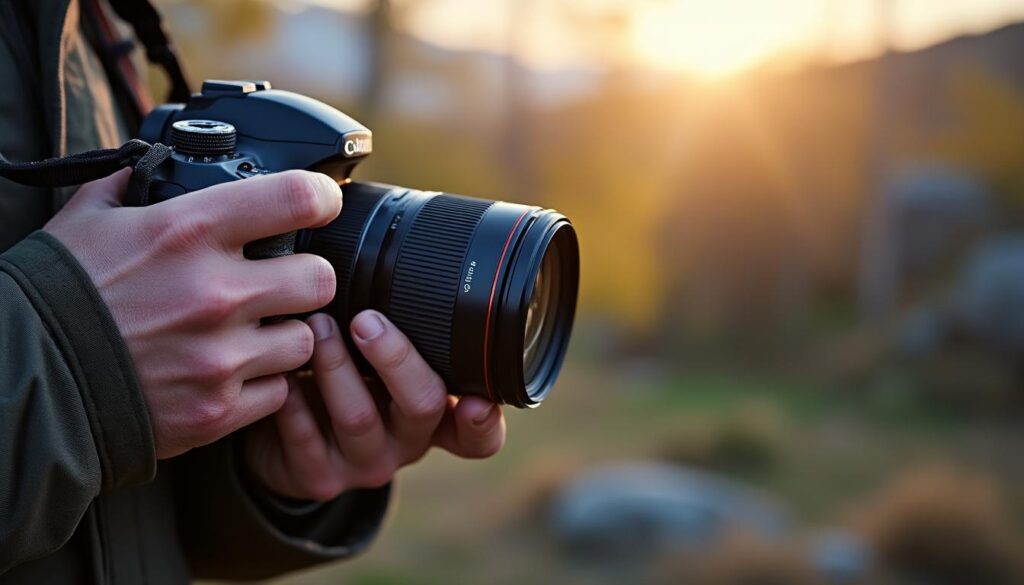
In the world of photography, some terms may seem enigmatic, but they are essential to mastering this art. One of these terms is “stop,” a fundamental concept that directly influences the quality of the images we capture. Understanding what a stop file entails and its interaction with exposure settings can transform your shooting approach. This article delves deeply into this notion to reveal all its secrets and enable you to master your camera.
Definition of a stop in photography
The term “stop” in photography refers to an exposure increment that doubles or halves the amount of light reaching the sensor. To better grasp this idea, it is crucial to look at the three main settings in photography: shutter speed, aperture, and ISO sensitivity. Each of these elements plays a significant role in determining exposure.
When we talk about stop, it is important to know that exposure is influenced by three parameters:
- Shutter speed: It determines how long light enters the camera. Common shutter speed values include 1/1000 s, 1/500 s, and so on.
- Aperture: It determines the size of the diaphragm opening, allowing light to pass through. Values range from f/1.4 to f/32.
- ISO sensitivity: This represents the sensor’s sensitivity to light. For example, ISO 100 to ISO 6400.
Changing one of these settings by one increment, whether by increasing the shutter speed or adjusting the aperture, corresponds to a change of one stop. For example, moving from f/4 to f/2.8 doubles the amount of light, which is an adjustment of one stop.
Importance of the stop for exposure
Understanding the stop is essential for anyone venturing into photography. Using stops allows you to explore the balance between contrast, clarity, and brightness of an image. By adjusting the light, you can affect not only the exposure but also the overall mood of your shot.
To illustrate how stops can have a direct impact on the sharpness of an image, consider the following example:
| Parameter | Effect on exposure | Note |
|---|---|---|
| Shutter speed (for example, 1/60 s to 1/30 s) | Increases light but risks motion blur. | Ideal for static scenes. |
| Aperture (moving from f/5.6 to f/4) | Increases light, reduces depth of field. | Good for portraits. |
| ISO (moving from 200 to 400) | Increases sensitivity to light but may introduce noise. | To be used sparingly. |
Understanding stop values: the luminance index
In practice, the stop value can also be referred to by abbreviations such as IL (Luminance Index) or EV (Exposure Value). This diversity of vocabulary highlights a central concept in photography: exposure. Knowing how to navigate between these terminologies will help you communicate better with other photographers and develop your skills.
The values for aperture are as follows, with each transition representing one stop:
- f/1.4
- f/2
- f/2.8
- f/4
- f/5.6
- f/8
- f/11
- f/16
- f/22
- f/32
This aperture table makes understanding stops more accessible.
Maintaining a clear understanding of these values will allow you to adjust your exposure accurately, optimize light, and ultimately enhance your photographic captures.
The impact of stops on composition
Stops do not only play a technical role or function but also influence the composition of your images. A good photographer knows that light is one of the main elements of composition. The positioning of light can create interest, add depth, and even transform the perception of an image.
By adjusting stops, you can modulate shadows and reflections, paving the way for more dynamic compositions. Here are some points to consider:
- Shadow play: By reducing light, you can accentuate shadows, which can enhance the depth of your composition.
- Reflections: By controlling light, you can master reflections, which can add an extra dimension to the photo.
- Contrast: Manipulating exposure stops influences the presence of contrast in an image, which can change everything in terms of photographic dynamics.
To better understand this impact, consider a scenario where you capture the same landscape at different exposures. Variations in the use of stops will have considerable visual effects, allowing you to choose the ideal option for your artistic vision.
Why care about stops: practical tips
Understanding how to balance exposure settings with stops can be complex, but there are practical tips that can make this process easier. Here are some recommendations to help you navigate this fascinating world:
- Experiment: Test different settings in various lighting situations. Take photos while modifying stops to see how it influences your images.
- Use charts: Keep charts or diagrams to remind you of aperture, shutter speed, and ISO values.
- Watch tutorials: Many photographers share their techniques online. Watching these videos can enrich your knowledge and improve your practice.
Use case: the example of the Nikon system
A relevant example of how stops work can be found in modern camera systems, such as those from Nikon. Their image stabilization technology, capable of compensating for up to four stops, is a significant advancement. This means that a photographer can adjust their shutter speed without introducing motion blur.
Here’s what this could imply in practice:
| Situation | Stop adjustment | Effect on the image |
|---|---|---|
| Moving from 1/1000 to 1/60 | 4 stops | Less motion blur in low light situations. |
| Moving from f/11 to f/2.8 | 4 stops | Increased brightness and background blur. |
| Moving from ISO 3200 to ISO 200 | 4 stops | Reduced noise, improved image quality. |
Deepening knowledge: resources and guides
For those eager to deepen their understanding of stops in photography, several resources are available to you:
- Nikon: provides detailed guides on using their equipment and applying exposure values.
- Clicovia: offers articles on the basics of exposure for beginner photographers.
- Pat Photographie: provides practical tutorials and resources on exposure management.
Exploring these sites can enrich your knowledge of stops and offer you different perspectives on using your camera.
What is a stop in photography?
A stop in photography represents a change of one increment in exposure settings, which doubles or halves the amount of light that reaches the sensor.
How do stops affect exposure?
Stops influence the brightness of the image by modifying shutter speed, aperture, and ISO sensitivity, thereby impacting contrast and clarity.
How to adjust stops to improve my photos?
To adjust stops, it is advisable to experiment with different settings and observe how it affects your images.
What are common stop values?
Common stop values include apertures f/1.4, f/2, f/2.8, f/4, f/5.6, f/8, and shutter speeds of 1/1000 s, 1/500 s, 1/250 s.