
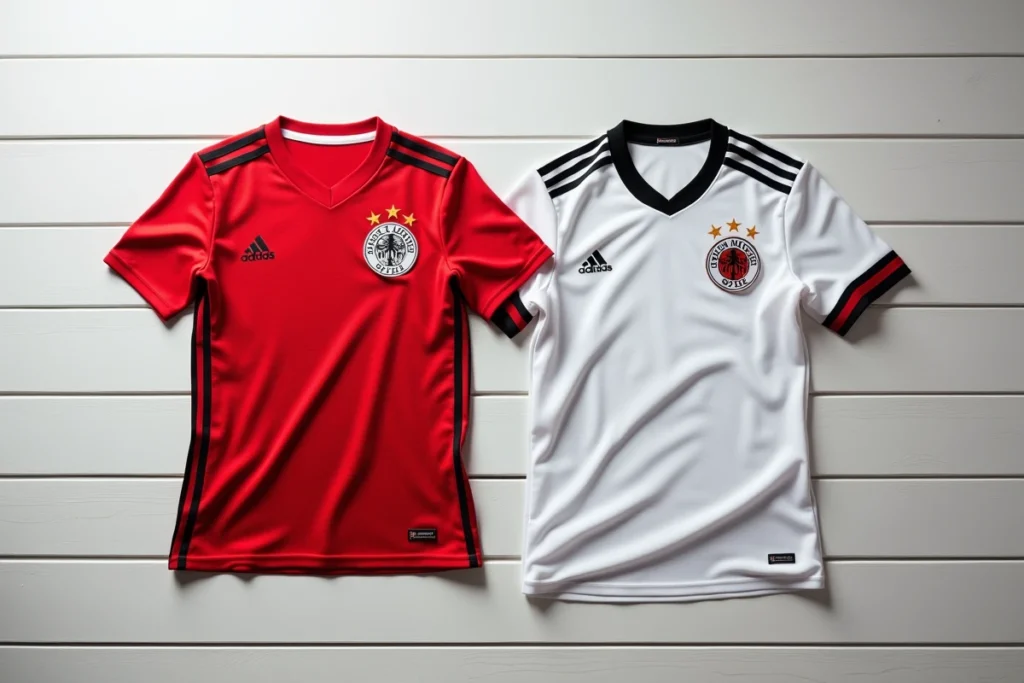
A premium Bastard München jersey and a counterfeit may look identical in an online store photo. The colors, logo, and typography of the print faithfully reproduce the Blue Lock universe. The difference lies elsewhere: in what you touch, what you wear, and what you read in the seller’s legal notices.
Fabric texture and fit: the two clues that the photo doesn’t show
The visual of a Bastard München jersey is easily copied. Current digital printing allows for the reproduction of burgundy and black gradients with sufficient fidelity to deceive an online purchase. The area where counterfeits still fail is in the fabric and fit.
A high-end jersey uses breathable technical mesh polyester, with a smooth but not slippery feel. The counterfeit resorts to low-quality polyester, often thicker, rigid to wear, with a slightly shiny appearance that betrays a different surface treatment. This detail is not visible in a photo, but is felt at first touch.
The fit is the other reliable signal. Premium jerseys follow a consistent and stable size guide from one production to another. Counterfeits show notable discrepancies: an M that fits like an S, sleeves that are too short compared to the torso, a collar that gapes.
When multiple buyers report size inconsistencies on the same product, the likelihood of a copy increases significantly. To better understand the textile quality markers applied to this jersey, the details published on the Moderne Mode and Bastard München jersey site usefully complement this reading grid.

Internal seams and finishes: what the inside of the jersey reveals
Turning a jersey inside out provides more information than an hour spent comparing photos online. It’s the first reflex to adopt once the product is in hand.
On a quality Bastard München jersey, the internal seams are flat, even, and without loose threads. The topstitching follows a straight line, with a consistent number of stitches per centimeter. The reinforcements at the armholes and collar are symmetrical.
Counterfeits show uneven seams, sometimes wavy, with threads sticking out or poorly folded excess fabric inside. The hems at the bottom of the jersey and sleeves often show a visible offset. These defects are not trivial: they also affect the garment’s durability, which deforms or unravels after a few washes.
- Check the regularity of the seams at the armholes, collar, and hems, comparing the left side to the right side.
- Look for loose threads or visible knots inside, a sign of quick and poorly controlled manufacturing.
- Observe whether the inner labels are neatly sewn or simply heat-pressed crookedly.
Seller’s legal notices: the filter before purchase
A specialized Blue Lock seller is not automatically a reliable seller. Several online stores present themselves as niche sites dedicated to manga without providing the minimum guarantees of a serious merchant. The status of the site is as important as the product displayed.
Before ordering, three quick checks eliminate most risks. First, the legal notices: a French site must display a SIRET number, a physical address, and the identity of the publication manager. Their absence is an immediate warning signal.
Next, the return conditions. A seller of premium jerseys offers a clear right of withdrawal with a refund. Counterfeit sites make returns deliberately complicated (return costs borne by the buyer to a warehouse abroad, vague refund timelines).
Finally, the consistency of the catalog. A site selling a Bastard München jersey at a very low price while offering hundreds of other manga references without any real textile specialization deserves thorough verification.
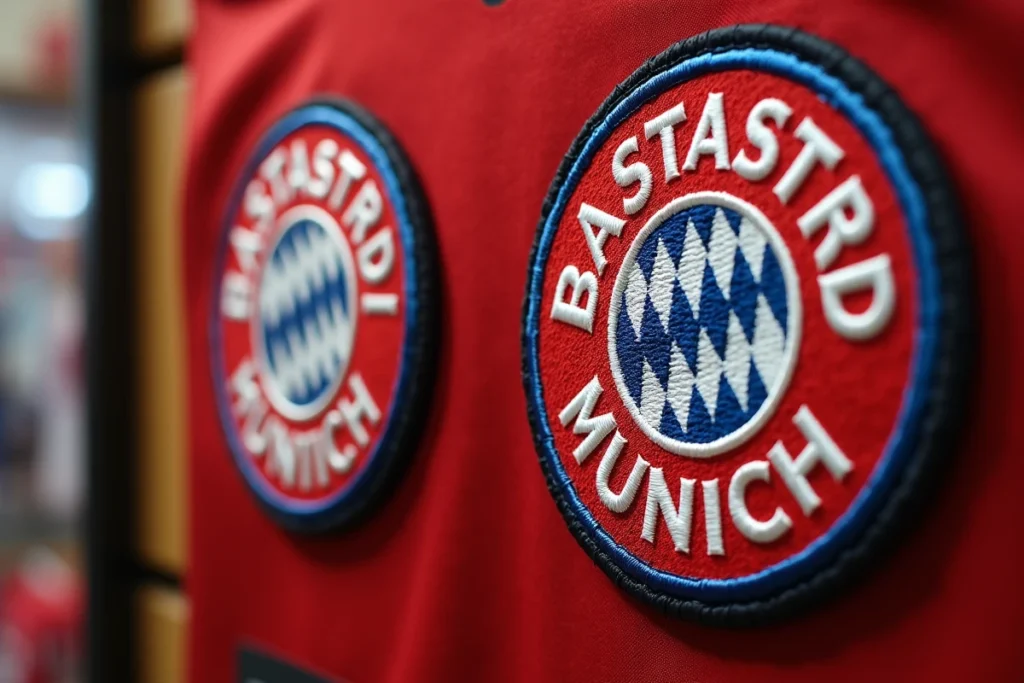
A bundle of clues rather than a single detail: the reliable authentication method
French customs authorities describe counterfeit detection as relying on a bundle of converging clues rather than a single criterion. This approach directly applies to Bastard München jerseys.
A single sewing defect may be an isolated production incident. An inconsistent fit may result from a standardization issue. Taken separately, none of these elements constitutes proof. Combined, they form a reliable diagnosis.
- The fabric lacks flexibility and has an artificial shiny appearance.
- The fit does not match the advertised size guide.
- The internal seams are irregular, with loose threads.
- The seller displays neither a SIRET number nor a verifiable physical address.
- The return conditions are absent or deliberately discouraging.
When three or more of these signals coincide, the likelihood of a counterfeit becomes very high. The absence of a visible defect does not guarantee authenticity: it is the convergence of checks that determines.
The case of peer-to-peer resale platforms
On marketplaces like Etsy, the difficulty increases further. The photos are often of the actual product, but the jersey shipped may differ. Requesting a photo of the inner label and seams before purchase remains the best protection. A seller who refuses this request or only provides generic promotional visuals does not deserve the transaction.
The increasing sophistication of copies makes visual inspection alone insufficient. The feel of the fabric, the consistency of the fit, the quality of internal finishes, and the transparency of the seller form the four pillars of solid verification. No shortcut replaces this methodical inspection.